6 min read
Pizza and Wine Pairing Guide for Italian Flavors
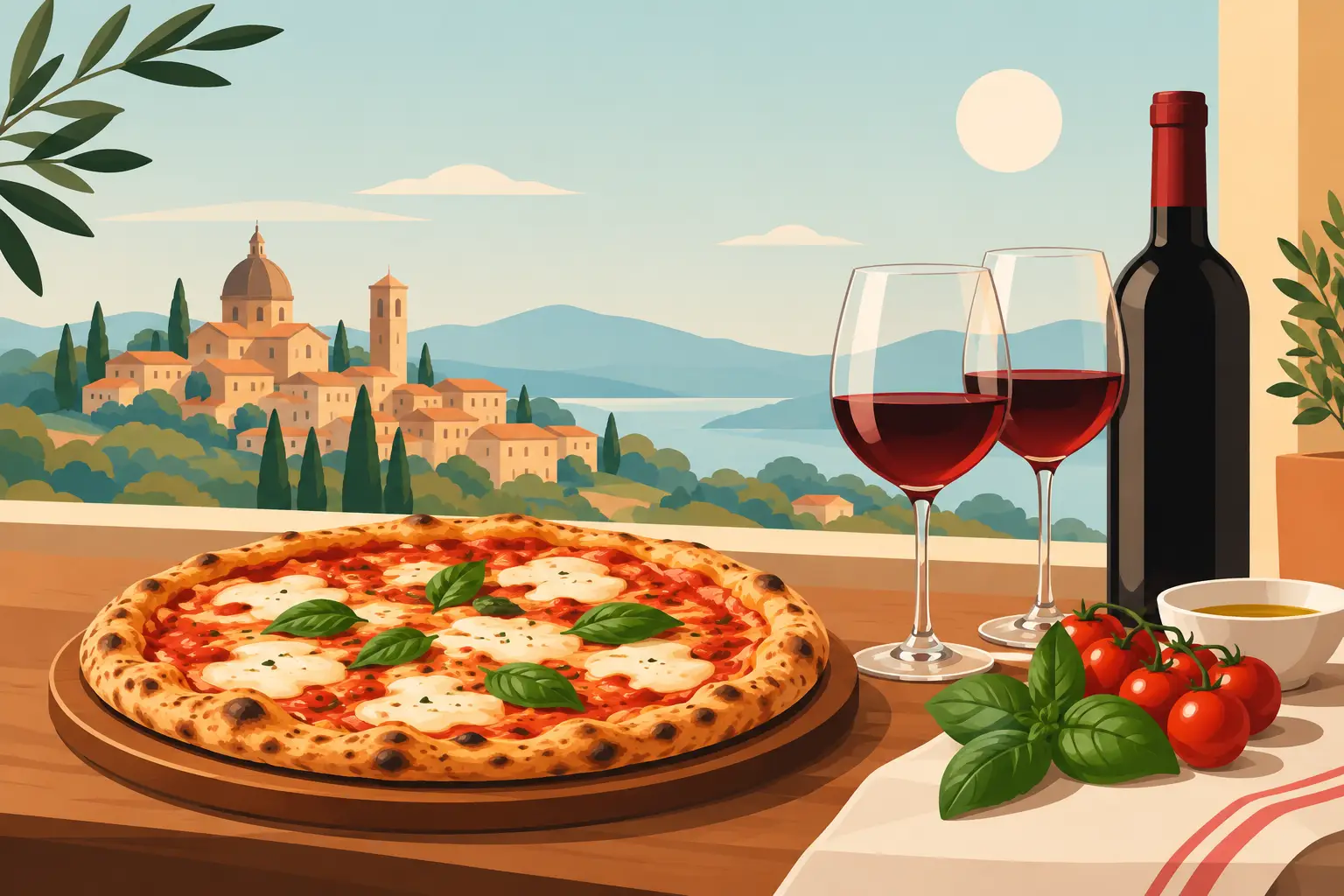
Fresh from the wood-fired oven, the pizza's crust is slightly smoky, the center is juicy, and the cheese stretches while still piping hot. You don't necessarily need the most expensive bottle for this, but rather a wine that doesn't try to overpower the food. This pizza and wine pairing guide will help you choose with confidence, whether you're ordering a light Margherita or a bold, meaty pizza.
You don't need to be a sommelier to make a good choice. Just keep three things in mind: how much tomato is on the pizza, how rich or creamy the toppings are, and how intense the flavors of the meat, vegetables, or cheese are. The wine's acidity refreshes, the tannins provide structure, and the fruitiness brings the ingredients together. The goal isn't to memorize rules, but to ensure that after every bite, you happily reach for the next sip.
How does pizza and wine pairing work?
A tomato base naturally has high acidity, which is why flat, sweetish, or overly full-bodied wines often feel clumsy alongside it. A lively, fresh red or rosé follows the rhythm of tomato, olive oil, and basil much more naturally. You can also pair pizza wonderfully with white wine, especially when it features a white base, seafood toppings, or plenty of vegetables.
Cheese is another key player. Mozzarella is soft and milky, so it doesn't need heavy tannins. Parmesan, gorgonzola, or other aged cheeses, on the other hand, are saltier, richer, and bolder—these can handle a more serious red or a crisp, dry white.
The aroma of the wood-fired oven matters too. The charred notes and subtle smokiness of authentic crust baked at high heat pair brilliantly with fruity, spicy Italian reds. At the same time, don't base your choice solely on the oven's character for a lighter pizza: if the toppings are minimal, keep the wine light and vibrant.
Pizza and wine pairing guide for the most popular toppings
Margherita: Sangiovese, Chianti, or dry rosé
A Margherita seems simple, but that's precisely why any imbalances cannot hide. Tomato, mozzarella, basil, and great dough—that's all it takes for a fresh, medium-light Sangiovese to feel right at home. It has the cherry fruitiness and vibrant acidity that respond beautifully to the tomato.
A young Chianti brings the same profile with a bit more spice. If you prefer a lighter, sunnier direction, go for a dry rosé. This is an especially great choice on a warmer evening, on a terrace, or when several different pizzas arrive at the table.
Prosciutto, salami, or meat pizza: Montepulciano and Primitivo
Ham, salami, and sausage toppings bring salt, fat, and spice to the pizza. A slightly fuller red wine works well here, as it has enough substance to maintain balance. Montepulciano d’Abruzzo, with its sour cherry and plum fruitiness and softer tannins, makes a pleasant companion to salty, meaty toppings.
Primitivo is an even richer choice with riper fruit. It works well if the pizza is more piquant, heavily topped with cheese, or if you simply crave a rounder, warmer red. The trade-off here is that a Primitivo with very high alcohol and jammy notes can overpower a thin crust. In that case, it's worth serving it slightly cooler, around 15–16 °C (59–61 °F).
Spicy pizza: fruity red or chilling rosé
Spiciness amplifies the perception of alcohol, so tread carefully with very full-bodied, high-alcohol reds. A fruity, less tannic red, such as a Barbera, pairs better with chili. Its acidity refreshes, and its juicy fruitiness won't drown out the spices.
A dry rosé is also fantastic with spicy salami pizza, especially during a shared dinner. Rosé provides a more refreshing effect, handles salt and fat well, and doesn't compete with the chili. If someone at the table isn't into red wine, this is one of the safest crowd-pleasers.
Mushroom and vegetable pizza: Pinot Noir or Verdicchio
The earthy, umami flavor of mushrooms calls for a more delicate touch. A heavily oaked, highly tannic red can overwhelm it, but a light Pinot Noir brings it out beautifully. Red berries, mild spice, and a silky structure pair especially well with mushrooms, arugula, grilled zucchini, or eggplant.
If the pizza has a white base with lots of vegetables and little tomato, try an Italian white wine. Verdicchio's crisp acidity, along with its citrus and almond notes, complements creamier bases nicely while keeping the palate clean. This is a great example of why you don't always have to pick a red wine with pizza.
Four-cheese pizza: white wine or soft red
Four-cheese pizza offers one of the most exciting terrains for wine pairing. The softness of mozzarella and creamy cheeses coexists with the salty, bold flavor of blue cheeses. A crisp, dry white—such as a Pinot Grigio or Verdicchio—cuts through the rich texture wonderfully and leaves a clean finish.
If you'd rather drink red, stick to a lighter style with lower tannins. Barbera or a young Sangiovese is a good way to go. Too much oak, harsh tannins, and heavy body can produce a metallic, bitter edge alongside salty cheeses.
Tuna, shrimp, or seafood pizzas: crisp Italian white
White wine is the natural choice for seafood. Vermentino's saline, citrusy, and herbal character works especially well with tuna, shrimp, lemon, and fresh herbs. A light Pinot Grigio is also a reliable choice if the toppings are more subtle.
Red wine isn't forbidden here, but it rarely yields great results. If you still want red, choose an extremely light wine with virtually no tannins, and steer clear of oaked, full-bodied bottles. Delicate seafood flavors quickly disappear next to an overpowering wine.
One table, multiple pizzas: how to choose a bottle to share
At a dinner with friends, everyone rarely orders the exact same pizza. One person wants a Margherita, another spicy salami, and someone else goes for mushroom or four-cheese. Don't try to find a separate, perfect bottle for every single topping. A good Chianti, Barbera, or dry rosé is a versatile option that works with most tomato-based, vegetable, and moderately meaty pizzas.
If white-base, seafood, and four-cheese pizzas dominate, lean toward Verdicchio or Vermentino instead. And if the table is truly divided between two different styles, the simplest solution is to share one bottle of white and one bottle of red. That way, everyone gets to taste, and the evening doesn't boil down to a single compromise.
At Ape Regina's table, it's particularly easy to keep things playful: with the open kitchen, dough freshly kneaded every day, and an authentic wood-fired oven, wine isn't an exam subject—it's part of the Italian dining experience. Notice how the same sip transforms after a slice of basil Margherita versus one with spicy salami.
Temperature and serving: where the pairing can be won or lost
Even the right wine can disappoint at the wrong temperature. Chill whites and rosés, but not until ice-cold: around 8–10 °C (46–50 °F), they reveal more aromas without becoming muted. Light reds also benefit from gentle chilling; at 14–16 °C (57–61 °F), they stay fresher and more fruit-forward.
And don't let the pizza get cold. The freshly baked dough, melted cheese, and oven aroma create the very experience you chose the wine for in the first place. Order a bottle you'd happily sip on its own, then let the next slice reveal a brand new side to it.